How exceptional is the 2026 drought in the Netherlands?
You can barely open a newspaper these days without reading about the drought. Take one look outside, and you’ll see why. The Netherlands simply isn't getting its usual summer rain. Is this rare, or should we be worried? I decided to look into it.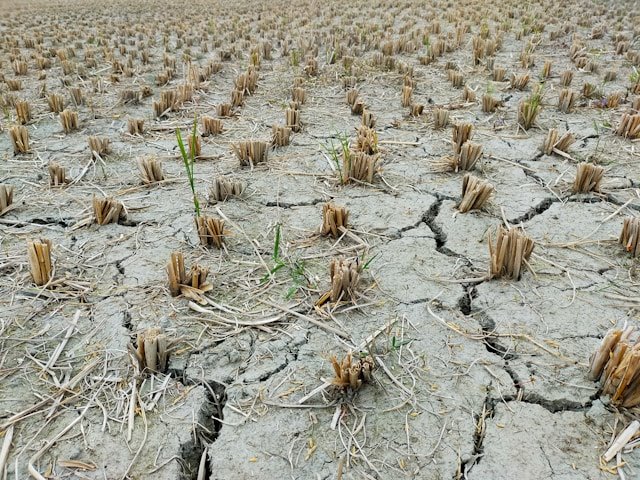
Author: Maurits
Maurits is a co-founder of Expat Guide. Originally from the Netherlands, he’s spent the last 15 years living as an expat. He loves writing about classic Dutch traditions, cultural quirks and anything else that catches his eye.
How exceptional is the 2026 drought in the Netherlands?
Yellow grass, dry roadsides, low water levels and farmland in urgent need of water. The drought has now lasted for months, and water authorities have introduced measures in many parts of the country. How rare is the current drought? Is 2026 truly a historically dry year, or have we seen similar conditions before?
2026 currently ranks among the most severe drought periods of the past century, but records have not been broken everywhere. Years such as 1921, 1976 and 2018 show that the Netherlands has faced very serious droughts before.
There is, however, one important area where 2026 is exceptional: the amount of water entering the Netherlands through the Rhine is lower for this time of year than at any point since measurements began.
First: what do we actually mean by drought?
Simply looking at how many millimetres of rain have fallen is not enough.
The Dutch meteorological institute KNMI therefore also uses what is known as the potential precipitation deficit. In simple terms, this is the difference between the amount of precipitation and the amount of water that can evaporate through sunshine, warmth and vegetation.
A summer with 50 millimetres of rain can therefore have a very different impact during cool and cloudy weather than a summer with the same amount of rainfall combined with abundant sunshine and temperatures above 30°C.
This precipitation deficit is particularly important in 2026. The year has not only been dry, but also unusually sunny and warm. As a result, large amounts of water are evaporating.
From 2026 onwards, KNMI has also started monitoring the precipitation deficit throughout the entire year, rather than only between 1 April and 30 September.
How much rain has fallen in 2026?
Looking at KNMI's nationwide figures for the first seven complete months of 2026 reveals an interesting picture.
| Month 2026 | Precipitation | 1991–2020 average |
|---|---|---|
| January | 70 mm | 68 mm |
| February | 56 mm | 58 mm |
| March | 47 mm | 53 mm |
| April | 8 mm | 40 mm |
| May | 57 mm | 56 mm |
| June | 85 mm | 65 mm |
| July | 15 mm | 78 mm |
| January–July | 338 mm | 418 mm |
By the end of July, approximately 338 millimetres of precipitation had fallen nationwide, compared with around 418 millimetres in an average year.
That means roughly 80 millimetres — or 19 percent — less rainfall than normal.
On its own, that may not sound extremely dramatic. But the timing and distribution of the rainfall make a major difference.
April and July were exceptionally dry
April produced an average of just 8 millimetres of rain, compared with the normal 40 millimetres. In other words, around 80 percent of the usual precipitation was missing.
At De Bilt, home to the Netherlands' main meteorological reference station, just 2.4 millimetres fell during the entire month. Only April 2007 was drier there since measurements began.
May was approximately normal in terms of rainfall, while June was actually wetter than average, with 85 millimetres compared with the usual 65 millimetres.
You might expect that to have solved the problem.
It did not.
A large proportion of June's rain fell during showers, while temperatures remained high and sunshine was abundant. Evaporation therefore remained significant.
Heavy showers can also wet the upper layer of soil without fully replenishing groundwater reserves. Rijkswaterstaat, the Dutch national water authority, has repeatedly pointed out that local rainfall during a prolonged drought is often insufficient to structurally restore groundwater levels and river flows.
Then came July.
Across the Netherlands, only 15 millimetres of rain fell in July, compared with a normal 78 millimetres. In western and southern parts of the country, many locations received less than 10 millimetres during the entire month. Vlissingen recorded just 3 millimetres.
July was also warm and very sunny.
That was exactly the combination needed for the precipitation deficit to increase rapidly.
By the end of July: a 248-millimetre precipitation deficit
At the end of July, the nationwide precipitation deficit had reached 248 millimetres.
That is roughly twice the amount normally recorded at that point in the year.
Even more strikingly, by late July 2026 was only around 20 to 30 millimetres behind the extreme drought years of 1976 and 2018.
The current drought therefore unquestionably falls into the exceptional category.
There has so far been little structural relief in August. Rijkswaterstaat's drought monitoring reported on 13 August that the Netherlands continues to experience prolonged drought and that the nationwide precipitation deficit is moving towards around 300 millimetres, comparable with the level reached in 2018.
Regional differences are even larger. In some areas, the deficit has already exceeded 400 millimetres.
August is, of course, not yet over, so there is no official nationwide monthly rainfall total for the month yet.
Does that make 2026 the driest year ever?
No. At least not yet.
The best-known Dutch drought year remains 1976. The maximum nationwide precipitation deficit that year reached around 360 millimetres.
The drought was not limited to the Netherlands either: the Rhine and Meuse catchment areas also suffered from severe drought conditions.
1921 was another extraordinary year. What made that drought particularly remarkable was its duration. According to KNMI research, the drought period around 1921 lasted approximately 30 months.
Other exceptionally dry years include 1911, 1947, 1959, 2003, 2018 and 2022.
KNMI regarded 2018 as one of the most severe droughts since the beginning of the twentieth century. A drought of that intensity occurred roughly once every thirty years in the climate conditions of that period.
The maximum nationwide precipitation deficit in 2018 was approximately 309 millimetres.
That means that by mid-August, 2026 is already approaching the level seen in 2018.
Whether the 1976 record will eventually be approached or broken depends heavily on the weather during the second half of August and September.
But something historic is happening on the Rhine
Perhaps the most striking figure of the 2026 drought does not come from a rain gauge, but from the Rhine.
On 6 August 2026, only 655 cubic metres of water per second entered the Netherlands at Lobith.
For that point in the calendar year, this represents the lowest Rhine discharge recorded since measurements began in 1901.
The absolute low-water record still belongs to 1947, when discharge fell to approximately 620 cubic metres per second in November.
But there is an important difference.
An extremely low discharge in November is generally less problematic than the same amount of water in the middle of summer.
In August, evaporation is much higher and agriculture, nature and society need significantly more fresh water. This is why KNMI describes the current Rhine situation as particularly serious.
Conditions upstream are exceptional as well. Measuring stations in Germany also recorded historically low river flows in early August.
The usual contribution from Alpine snowmelt was also smaller this year and occurred earlier than usual.
The Netherlands officially has a water shortage
The situation has now developed beyond a purely meteorological phenomenon.
Since 16 July 2026, the Netherlands has officially been experiencing an actual water shortage, level 2.
This means that Rijkswaterstaat, regional water authorities, provinces, drinking-water companies and government ministries are coordinating nationally to distribute the available fresh water.
Restrictions on the extraction of surface water and groundwater have been introduced in several regions.
Shipping is also being affected by low river levels, while additional measures are needed in western parts of the Netherlands to prevent salty seawater from penetrating further inland.
This does not mean the Netherlands is currently facing the highest crisis level.
Level 3, which indicates a potential national water crisis, has not been reached. According to Rijkswaterstaat, that highest level was last used in 2003.
Why does 2026 feel so extreme even when it sometimes rains?
Because drought has several different forms.
Meteorological drought simply means that there is very little rainfall.
Soil drought occurs when the soil contains insufficient moisture.
Hydrological drought develops when groundwater levels, rivers and other water sources remain low for a prolonged period.
In 2026, all three are occurring at the same time.
That is why a heavy thunderstorm can locally produce dozens of millimetres of rain without ending the drought.
June 2026 is a perfect illustration.
An average of 85 millimetres of rain fell nationwide, more than the normal 65 millimetres. In some locations, severe thunderstorms even produced more than 60 millimetres within a single day.
Yet the national water shortage did not disappear.
Recovering from a prolonged drought requires much more than a single wet day.
So has this happened before?
Yes.
The current drought is not unprecedented in Dutch history.
1921 and 1976 were more extreme or longer-lasting, while 2018 comes very close in terms of intensity.
Nevertheless, 2026 can already be described without exaggeration as an exceptional drought year.
By the end of July, the precipitation deficit had reached 248 millimetres. By mid-August, the Netherlands was moving towards a deficit of around 300 millimetres.
In some parts of the country, the regional deficit is considerably larger.
At the same time, Rhine discharge is lower for this time of year than at any point since measurements began in 1901.
That last point makes 2026 particularly remarkable: not only has the Netherlands itself received too little water, but its most important foreign source of fresh water is also under enormous pressure.
What role does climate change play?
A lack of rainfall cannot automatically be attributed to climate change.
KNMI points out that the average amount of rainfall during the growing season has changed relatively little so far.
The major difference lies in evaporation.
Higher temperatures mean that more water evaporates from soils, vegetation, rivers and lakes.
As a result, the same amount of rainfall can now produce a larger moisture deficit than it would have in the past.
Research into the European drought of 2026 concluded that the shortage of soil moisture has become significantly more likely because of current global warming.
For the western region included in the study, drought conditions like those observed between April and June were estimated to have become around five times more likely as a result of global warming.
For the eastern study region, which includes the Netherlands, prolonged dry conditions were estimated to have become around eleven times more likely.
That does not mean drought did not occur in the past — 1921 and 1976 clearly prove otherwise.
What it does mean is that the conditions in which severe drought can develop are becoming increasingly favourable.
Conclusion: exceptional, but not unprecedented
The Dutch drought of 2026 is therefore not an event without historical precedent.
The Netherlands has experienced very severe droughts before. The droughts of 1921, 1976 and 2018 remain important historical reference points.
But 2026 undoubtedly belongs in that group.
Up to and including July, around 19 percent less precipitation than normal had fallen, with April and July being exceptionally dry.
By the end of July, the precipitation deficit stood at 248 millimetres, and by mid-August the Netherlands was moving towards approximately 300 millimetres.
At the same time, Rhine discharge is historically low for this time of year.
Whether 2026 ultimately enters the history books alongside 1976 as one of the driest years ever recorded will only become clear later this year.
But one conclusion can already be drawn in mid-August:
this is not an ordinary dry Dutch summer.